Roatan, Honduras, draws travelers from around the world with its crystal-clear waters, vibrant coral reefs, and some of the most diverse marine life in the Caribbean. While daytime snorkeling along the island’s famous reefs is already a bucket-list activity, there’s an entirely different experience waiting once the sun goes down. Night snorkeling Roatan excursions reveal a side of the reef that most visitors never see.
When darkness falls over the water, the reef doesn’t go quiet. It transforms. Creatures that hide during daylight hours emerge to feed and explore, while others that seemed invisible under the sun suddenly become easy to spot in the glow of an underwater light. The experience feels quieter, more mysterious, and in many ways more intimate than a typical daytime swim.
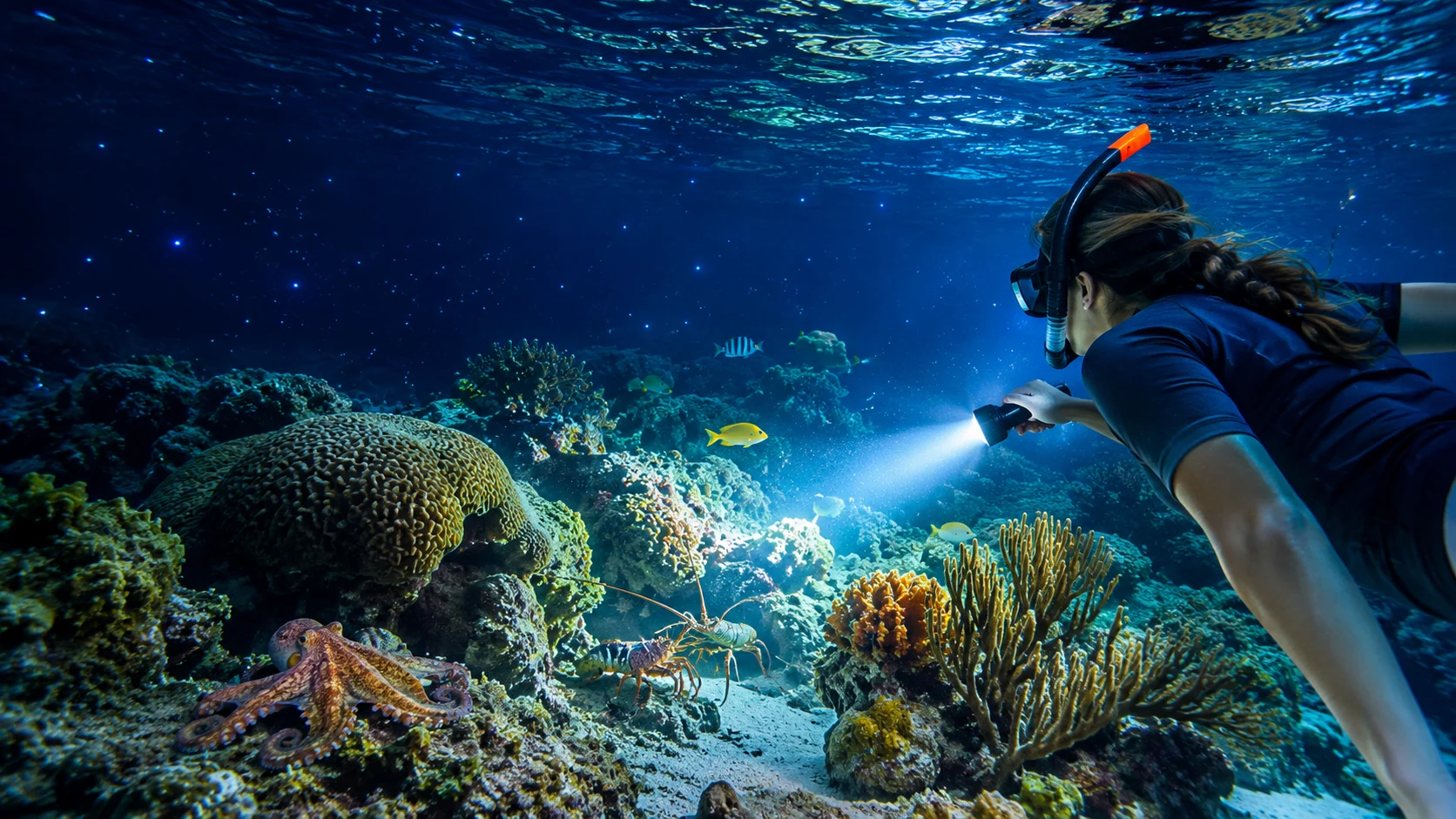
Armed with just a flashlight and a mask, snorkelers can follow their guide along the reef, watching beams of light cut through the dark water and illuminate coral formations, fish, and the occasional surprise guest. For anyone who has already explored Roatan’s reefs by day, night snorkeling offers a reason to get back in the water and see it all again from a completely new angle.
Why Try Night Snorkeling in Roatan?
Daytime reef exploration is all about color and clarity, with sunlight illuminating coral gardens and schools of fish in vivid detail. Night snorkeling swaps that bright, bustling scene for something calmer and more deliberate. Without the crowds of daytime tours and the ambient noise of boats overhead, the water takes on a peaceful, almost meditative quality.
This stillness comes with a payoff: nocturnal marine creatures that rarely show themselves during the day become active after sunset, offering sightings you simply won’t get on a midday excursion. Underwater lights play a key role here, cutting through the darkness so snorkelers can pick out coral textures, spot movement in the rocks, and watch marine life go about its nighttime routines.
Part of what makes this possible is Roatan’s location along the Mesoamerican Barrier Reef System, the second-largest barrier reef in the world. This rich, protected ecosystem supports an incredible range of species, which means the reef stays active and interesting no matter what time you visit.
What Marine Life Can You Discover During a Night Snorkeling Adventure?
Night snorkeling introduces visitors to a cast of marine characters that daytime tours rarely showcase. Here’s what to look for once the lights go down.
Nocturnal Reef Fish
Many reef fish shift into a different rhythm after sunset. Species that spend their daylight hours hiding in crevices or blending into the coral become noticeably more active once darkness sets in, using the cover of night to feed. Others seek out sheltered spots to rest, tucking themselves into coral formations where they’re easier to spot with a flashlight than they would be swimming freely during the day.
Octopuses and Other Reef Creatures
Octopuses are famously shy during daylight hours, but night snorkeling dramatically improves the odds of an encounter. Lobsters, crabs, and other small reef dwellers also tend to emerge after dark, crawling out from their hiding spots to search for food. Because these animals are naturally more cautious in bright conditions, nighttime observation often reveals behaviors—like hunting, foraging, or simply moving across open reef—that go largely unnoticed during a standard daytime swim.
Bioluminescence and Glowing Waters
One of the most talked-about aspects of night snorkeling is the possibility of encountering bioluminescent plankton. These microscopic organisms can produce a soft, natural glow when disturbed, creating a shimmering effect in the water that feels almost otherworldly. It’s worth noting that bioluminescence depends on specific environmental conditions and isn’t guaranteed on every outing, but when it does appear, it’s one of the more memorable sights the ocean has to offer.
What Makes Night Snorkeling Different from Daytime Snorkeling?
While both experiences let you explore the same reef system, the differences go beyond simply swimming in the dark:
Visibility: Daytime snorkeling relies on natural sunlight to illuminate the reef, while night snorkeling depends entirely on underwater flashlights to guide the way.
Marine Activity: Certain species that stay hidden during the day become far more active and visible after sunset.
Atmosphere: Night snorkeling tends to feel quieter and more adventurous, without the daytime crowds or boat traffic.
Photography: Capturing quality underwater images at night usually requires specialized camera equipment and additional lighting, unlike daytime shots that benefit from natural light.
Experience: Both options offer valuable, distinct ways to appreciate Roatan’s marine ecosystem—daytime for color and clarity, nighttime for mystery and rare sightings.
What to Expect During a Night Snorkeling Tour in Roatan
A guided night snorkeling excursion typically follows a structured, safety-focused format. Visitors meet their tour guide beforehand for a safety briefing covering what to expect in the water and how to stay within the designated area. Guides also help snorkelers get familiar with their equipment, which usually includes masks, snorkels, fins, flotation devices, and underwater lights.
Once everyone is prepared, the group enters the water at an approved snorkeling location, chosen based on current conditions. From there, snorkelers follow their guide along the reef, observing marine life while learning about the nocturnal creatures they encounter along the way. After the guided portion wraps up, the group returns to shore or back to the boat.
Keep in mind that exact tour duration, departure times, equipment provided, and snorkeling locations vary depending on the operator, so it’s worth confirming these details ahead of time.
Essential Safety Tips for Night Snorkeling in Roatan
Night snorkeling is an incredible experience, but it does require some extra precautions compared to daytime swims. Keep these tips in mind:
- Choose a reputable operator with experienced, knowledgeable guides.
- Follow your guide’s instructions and stay within the designated snorkeling area.
- Use proper underwater lighting and safety equipment at all times.
- Wear a flotation vest if you’re not a confident swimmer.
- Avoid touching coral reefs or disturbing marine animals you encounter.
- Check weather conditions, water visibility, and sea conditions before heading out.
- Never snorkel alone at night, even if you’re an experienced swimmer.
- Skip alcohol before entering the water.
Responsible snorkeling practices protect both visitors and Roatan’s delicate marine ecosystem, ensuring the reef stays healthy for future snorkelers to enjoy.
Best Time to Experience Night Snorkeling in Roatan
The ideal time for night snorkeling depends largely on weather, water conditions, and visibility rather than a strict calendar date. Calm seas and favorable conditions make for a more comfortable, enjoyable swim, while choppy water or poor visibility can make the experience less rewarding.
Marine life sightings also vary depending on the season, specific location, and broader environmental conditions at the time of your visit. Because of this, it’s a good idea to check availability and current conditions with local tour operators before locking in your plans.
What Should You Bring for a Night Snorkeling Adventure?
A little preparation goes a long way toward making your night snorkeling trip comfortable and stress-free. Consider packing:
- Swimsuit and comfortable clothing
- Towel and a change of clothes
- Water shoes or other appropriate footwear
- Waterproof bag for personal belongings
- Underwater camera with suitable lighting, if you have one
- Reef-safe sunscreen for any pre-sunset sun exposure
- Personal medication and other necessary items
Since equipment offerings vary by operator, confirm in advance which snorkeling gear and safety equipment will be supplied versus what you’ll need to bring yourself.
Make the Most of Your Roatan Water Adventure with Mono Loco Tiki Tours
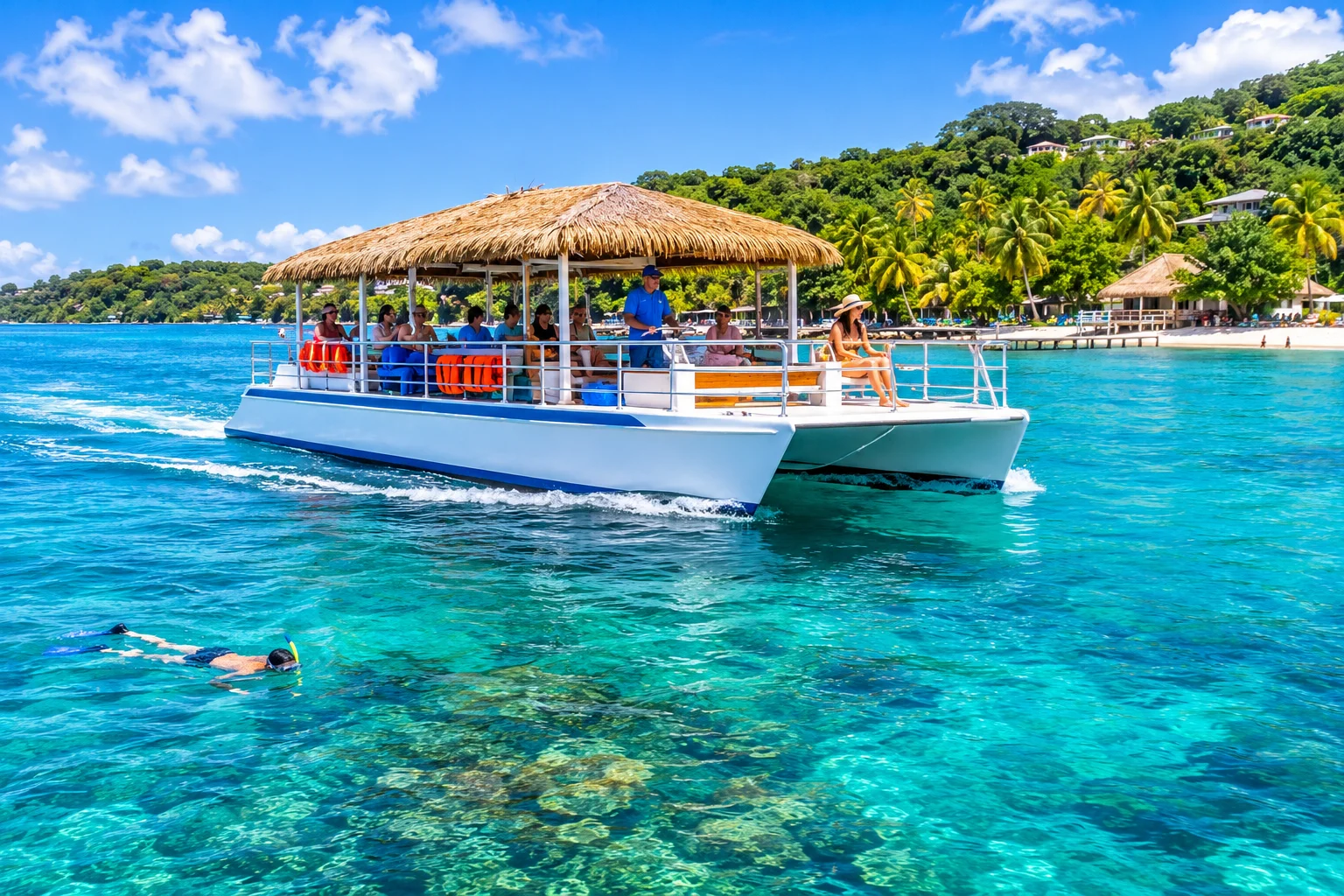
If you’re looking to explore Roatan’s waters with a local operator that knows the island well, Mono Loco Tiki Catamaran Snorkeling Tours offers snorkeling and boat adventures along Roatan’s North Shoreline, including the West Bay and West End areas. Their covered catamaran comes equipped with snorkeling gear, flotation options, onboard facilities, and an experienced crew ready to guide you through the island’s marine environment.
Beyond snorkeling adventures, visitors can also ask about their sunset dinner cruise options for a different way to experience the island’s coastline. If night snorkeling has caught your interest, reach out to the Mono Loco team directly to ask about availability or suitable arrangements for your visit.
Planning an unforgettable ocean adventure in Roatan? Contact Mono Loco Tiki Tours to explore available snorkeling experiences and find the right adventure for your visit.
About Mono Loco Tiki Tours
Mono Loco Tiki Catamaran Snorkeling Tours offers exciting ocean adventures along the beautiful North Shoreline of Roatan, Honduras. With snorkeling excursions, sunset dinner cruises, and comfortable catamaran facilities, the company helps visitors enjoy the island’s stunning coastal scenery and marine environment. Whether you’re visiting West Bay, West End, or Sandy Bay, Mono Loco provides memorable ways to experience Roatan’s Caribbean waters.
FAQs
Yes. Night snorkeling offers a completely different perspective on Roatan’s reef, with calmer waters, fewer crowds, and the chance to spot nocturnal marine creatures that stay hidden during daytime tours.
Visitors may encounter nocturnal reef fish, octopuses, lobsters, crabs, and other small reef creatures that become more active after sunset. Sightings vary depending on conditions and location.
Yes, as long as you book with a reputable operator, follow your guide’s instructions, and use the appropriate safety equipment. Staying close to your guide and within the designated area is especially important for first-timers.
Yes. In addition to standard snorkeling gear like a mask, snorkel, and fins, night snorkeling requires underwater lights to help you see the reef and marine life in the dark.
It’s possible, but not guaranteed. Bioluminescent plankton can create a glowing effect in the water under the right conditions, though this phenomenon depends on environmental factors that vary from one outing to the next.